Long Blog #4- Shelters are ill-prepared for COVID-19, help is needed.


With the current pandemic going on in the world, the Canadian government is forced to consider measures to prevent the disease from spreading– requiring health checks, instituting quarantines, and limiting public movement. However, not everyone is choosing to follow these measures. On the 8th of April, Toronto received four-hundred and eighty-two complaints from local residents about people breaking bylaws, and not practicing social distancing (Source-BlogTO).

At the beginning of the outbreak, when the government began to institute self-quarantines, people were still having a difficult time comprehending the seriousness of the situation. Mid March, the Queen’s St. Patrick’s Day party went on after health officials urged against it. Kraig Krause, videographer and anchor at Global news went to the streets and spoke to some of the students who attended the St. Patrick’s Day parties. When one student was asked about the seriousness of the virus, and whether or not they were worried that a large gathering could potentially spread the virus, he said “I’m from Scotland. I’ve travelled 3,000 miles, and obviously, the fact that the virus is happening is not going to stop me from getting steaming [drunk]” (Source- Global News).

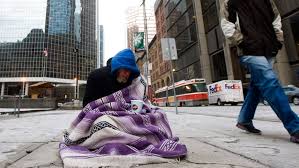
I feel as though people who have a home to self-quarantine, are forgetting just how lucky they truly are. For homeless people, the challenges have gotten even more extreme. Shelters are either filling up quickly, or are closed due to the fear of the risk of COVID-19. They have no access to bathrooms, soup kitchens are closing, or they are out of food and workers. While some have a warm place to stay during this quarantine, others aren’t so lucky. They are left in far worse conditions than ever before.

Advocates for the Toronto homeless population are now pleading for urgent actions and preventive measures from the government to prevent a large outbreak of coronavirus in the community and in shelters (Source- Global News). They are living in overcrowded shelters, sleeping within a couple feet of each other. Forget social distancing, they are unable to take proper safety measures to prevent the spread of the disease. It calls for increased assistance, to prevent further outbreaks. 

Source- CBC News

Time is not on our side. This needs to happen right now”.

Source- Global News

With the overcrowding of shelters, and the closing of other services, it is quite obvious that at this time there must be many public-health measures taken to protect the homeless. The measures that are suggested, are banning evictions of homeless encampments, more outreach support, an increase in nurses and harm-reduction workers, to ensure that people’s needs are being met, even if they are sleeping outdoors. To properly manage the COVID-19 pandemic, people need to be housed, or maintain their housing. In addition, addiction medications should be available for the homeless during their quarantine, to prevent a fatal overdose.

An email was released April 7th by the city of Toronto. In the email, it stated that the City’s Shelter, Support and Housing Administration Division has received confirmation from Toronto Public Health that there is a COVID-19 positive client at Seaton House. It has been the sixth positive case of an individual within the shelter system. Street nurse Cathy Rowe says that the city should move faster in relocating high-risk individuals into hotel rooms, to prevent the virus from spreading.

They’ve got 1,200 rooms and at least 900 of them are sitting empty right now, and now that we have a case with Seaton House where there (are) easily over 100 people that could have been moved out there last Friday or a week ago. And it didn’t happen”.

Source- Global News

Crowe claims that to limit the spread of COVID-19 in the shelter system, there needs to be a “military-style operation” to move people out of the shelters within the next 24 to 48 hours. If people don’t begin to realize the effects that their actions have, by going outside, and hanging out with friends, this pandemic is going to last much longer than anticipated. Which is a nightmare for those that are a part of the shelter system. 
Sources:

https://www.wired.com/story/coronavirus-covid-19-homeless/

https://www.thestar.com/news/gta/2020/04/07/positive-covid-19-case-identified-at-torontos-seaton-house-homeless-shelter.html

https://www.blogto.com/city/2020/04/toronto-complaints-social-distancing-parks/

Short Blog #8- Comment on Rekha’s Long Blog #3

Until reading this blog post, I had no idea that these railings on benches are something that are so controversial. I just assumed that it was a divider for different people to remain separated, and have their own space while seated. It is very upsetting to think that it is actually a strategy to avert the homeless. I agree with you, when you say that rather than spend money on these dividers, that money should go towards homeless shelters.

Long Blog #3- “Sold over asking”

The Toronto housing market prices are rising at an all time high. A report done by RBC Economics places emphasis on the fact that the Toronto housing market is picking up speed at an “uncomfortable” magnitude– one that resembles how the market was in 2016. Grant Duarte’s parents bought their first home when they were 25– it was a three bedroom home, with a double garage in Mississauga. They bought the home in 1992 for $192,000. In 2000, they decided to move and sold the home for $260,000. Today, due to the price inflation in the economy, the same home that was bought for $260,000- is now worth upwards of $1 million. It is becoming incredibly difficult for anyone to find an affordable home in Toronto, even more so for millennials who probably do not have a stable income. As an individual who is interested in living in Toronto long after University, what does this mean for me? Will the skyrocketing house prices prevent me from continuing to stay a resident in the city? 

Photo posted by the Toronto Reality Blog. This photo is an example of the rising housing market prices in Toronto. Homes are being sold over asking price due to the constrained supply of available homes for purchase.

From a recent study that was done by the Toronto Real Estate Board, January was the largest month-over-month price increase since October 2017 (See data set below). There was an average selling price increase by 12.3 percent year-over-year. From TD Economics an analysis was done, they predict an acceleration in the price growth from four percent in 2019, to eight percent this year, due to the combination of rising demands and constrained supplies. 

In January, the average price for detached homes in Toronto was $1,038,247, it has gone up 10.5% since the year before. Condo prices have grown 15% since the year prior, the prices are currently sitting at an average of $630,047. These numbers are scary for first time buyers, especially ones with an unstable income. How is anyone ever going to enter the marketplace when the prices are so steep? The expected key issue that will occur in the housing market in 2020, will be the shortage of listings. It is said that without relief on the housing supply front, the pace of price growth will continue to rise.

The following video is an interview with Penelope Graham, the managing editor at Zoocasa. She goes into depth with BNN Bloomberg news reporter, about how the Toronto median house price is nearly equivalent to the yearly salary of an average person living in Toronto.

As a University student, the rise in the housing prices is becoming more and more unsettling. I am becoming anxious thinking about how difficult it will be to find a home post-university, or even for the next year. A group of my friends and I are now looking for places to rent and we are shocked about how the prices have increased over the years. One of my friends’ brothers went to the University Of Toronto fifteen years ago, and the prices were much more affordable. This drastic change in the prices of homes in Toronto is outstanding, as an individual planning on living in Toronto later on, I am fearful of these prices.

Sources

https://www.zolo.ca/toronto-real-estate/trends

https://www.mortgagesandbox.com/toronto-real-estate-forecast

https://www.thestar.com/business/2019/11/26/home-prices-in-toronto-will-jump-6-next-year-report-says.html

Short Blog Post #7- Earthroots (401 Richmond)

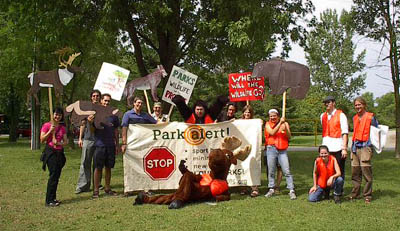
Earthroots is a non profit organization that is dedicated to preserving the wilderness, wildlife, and the watersheds in Canada. Both of Earthroots campaigns: Earthroots Fund, and Earthroots Coalition, focus on achieving protection for Ontario’s threatened wilderness areas, and wildlife species. Earthroots knowledge on wildlife has educated the public, conducted media events, and carried out wilderness research projects. They have empowered thousands of Canadians to advocate for better environmental protection. 

Short Blog #6- My Response to COVID-19

I woke up Friday morning as normal, I started my morning by beginning to think about what I had to get done for the upcoming week: the in-class presentations, and field trips I had to prepare for. When I turned on my phone, I had numerous text messages from my classmates informing me of the University Of Toronto’s recent closure decision. I was flooded with various emotions, but one trumped all: I was absolutely stunned. I did not anticipate that more than halfway through the second semester we would experience such an event. I am still reeling from the decision, and trying to adjust to the new online methods of teaching my classes have adopted. 

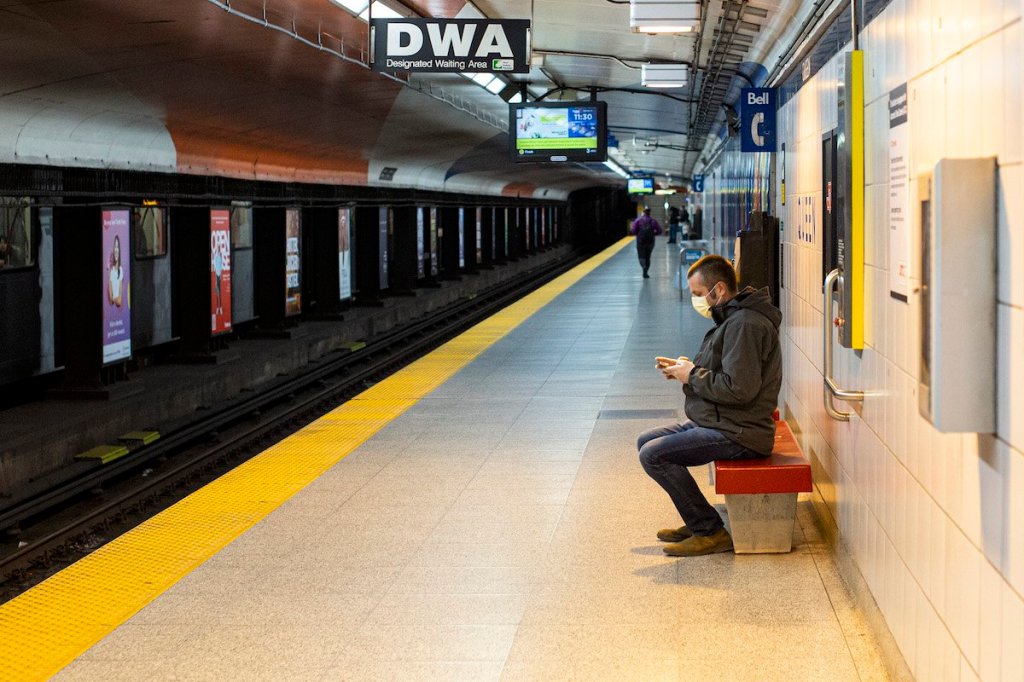
Immediately following the news, I began to see people in my residence pack up their things and leave, deserting the place that they called home for the past eight months. While using the ttc this weekend, it was not the same. It felt emptier than usual. There were the occasional commuters that I would see, but not nearly as much as there would have been the week before– or even days before. The public has been informed to stay home during this outbreak, and I believe that they are taking that advice to heart. 

Long Blog Post #2- The Issue With no Name

The issue of domestic violence is one that has embedded itself into history worldwide. It went from an issue with no name, that wasn’t properly acknowledged, to one that was understood and given the proper provisions to prevent. The women who created Canada’s first women shelters are often referred to as the unsung heroes who fought to deal with the problem society deemed unworthy and wanted to keep in the shadows.


“The issue of domestic violence was a private reality for most women, but not an issue considered the business of [the] government or police”. –thespec

These women brought forward an issue in Canada, that was viewed as unimportant, and unworthy of issuing changes. Against the attempt to bury the issue of domestic violence, different groups of women from across Canada worked to open the first Canadian women’s shelters: Toronto’s Interval House. 

In 1973, Jan’s husband spent most of his days drinking, one particular afternoon, he smacked her head against the wall, nearly cracking her skull. When the police arrived, her husband resumed his position on the couch watching TV as if nothing had happened. Once police were done questioning the couple separately, Jan recalls them addressing her before they departed by saying “You better behave yourself”.  She had no resources that would give her the ability to leave, she wanted to leave, but she didn’t have the financial means, or a place to run off to with her children. 

Image result for domestic violence against women

Nothing came easy for those who started the Toronto’s Interval House, they had to work for everything they achieved. The issue of domestic violence towards women did not change overnight, it was a brutal battle that started with ensuring the safety of those women, and providing them with a place to go. 

Lynn Zimmer was a 24-year-old who spent a year in law school, where the professor would entertain and encourage discussions of what he deemed “funny” sexual assault cases. During the summer of 1972, Zimmer was volunteering at the Women’s place. Initially those locations were for political organizing, but women who had been beaten or raped would show up requesting help. They did not have the ability to apply for welfare, since they lacked an income and an address. 

It all started with a note, Zimmer stuck a note on the wall of the Women’s place, asking those who were interested in creating a women’s shelter to attend a meeting. At the meeting sat the future eleven founders of the first Canadian Women’s shelter– unaware of how their one meeting would impact history.

InasmuchHouseWomensShelter.jpg
 Photo taken from Mission Services

They secured a grant from the Federal government that focused on youth employment, giving them the opportunity to kickstart their journey to remove the issue of domestic violence against women out of the shadows of world issues. 

On April 1st, 1973 the doors of the Interval home were open– initiating the beginning of protection of women and children suffering through domestic abuse. 

The opening of this shelter gave Jan the ability to leave her abusive home, and eliminated her concerns of finances and having a warm place to stay with her children. 

Today, shelters that offer refuge to women in the GTA, are becoming overwhelmed by the demand, and have had the unfortunate task of turning women and children away.

How has Canada come so far for the issue of domestic violence against women, but still struggling to gain the extra funding necessary.

“The wait is too long. We’re seeing women wait two, three years and not get a call for social housing”. 

There is a high demand for long-term housing in contrast to short term housing. Which is where we stumble on an issue, women are looking for a place to stay with their children long term– therefore the lack of funding is what the issue is. See this link to find more information– https://globalnews.ca/news/5228696/canadian-shelters-women-funding/

The House of Commons committee on the statue of women issued a report of 20 recommendations to provide more accessible women shelters. Some of the recommendations are as follows: more funding for repairs, renovations and expansions and more funding for on-reserve shelters: to expand culturally sensitive services.

These recommendations will help improve the stability of women shelters, and give opportunities for an expansion of resources. The issue of women shelters is one that has had excruciating long term effects on not only Canada, but worldwide. Individuals have been extremely tentative to the issue, which comes out to being a positive, ‘slow and steady wins the race’. The inadequate funding of women’s shelter is an uphill battle, but it is one that is being worked towards by many. 

Sources

Shelters in Canada are turning away women due to lack of resources, funding: studies

https://www.thespec.com/community-story/7388647-the-story-of-canada-s-first-women-s-shelter/

https://thetyee.ca/Culture/2019/10/31/Unsung-Heroes-Womens-Shelters/

Short Blog Post 4- Comment on Catherine’s Long Blog 1

I think that you picked a very relevant topic to discuss in your long blog post. The fact that you included your personal experience in the courtroom, and the difficulty you had hearing some of what was going on was a great way of leading into your story, since you were giving a real-life example. I feel as if you then integrated well into your next points by including the accessibility issues other individuals have gone through as well. I agree with what you are saying throughout your blog post, and although 5 years does not seem too far from now, it is still a long wait. I am glad however that more opportunities are becoming accessible, no matter the time frame they may present themselves in. I also appreciate your inclusion of external sources to assist in giving the reader the opportunity to look further into your topic. See the blog post below:

Short Blog 5- Comment on Maher’s Short Blog 1

While reading your blog post #1, I took note of something you said in regards to the rise in the price of the housing market. I have to agree with you in the sense that this brings challenges to living in the city after university. It is actually one of my biggest concerns, since I know that in the economy we live in, the prices will only continue to increase as time progresses. See full post below:

Long Blog #1: Victims at the hands of impairment

Throughout the past couple of years adjustments have been made to heighten the punishments of individuals convicted of driving under the influence. However, the roads appear to remain just as dangerous. What must be done to ensure that lives are not lost at the hands of an impaired driver? 

Days before Christmas, there were two teens killed and one injured due to an alleged drunk driver. The victims were walking on the sidewalk in the East end of Toronto when they were struck by a car. They were all taken to the hospital immediately following the accident, where the two 19 year olds were pronounced dead shortly there after. The other victim had survived the accident physically, but he will always have the emotional scars that will last a lifetime. Police have released that he was the brother of one of the victims. The attachment to the news report is in the link below.

That is just one case of drunk driving taking someone’s life– what must be done to prevent innocent lives from being stolen? In 2018, there were updates to the impaired driving laws, followed by adjustments being made to the criminal code to support these new laws. The changes were as follows: mandatory alcohol screening, no more “bolus” alcohol defence– preventing the argument that the alcohol was just consumed and had not been completely absorbed, and updated penalties.

These adjustments to the laws and charges surrounding impaired driving are what I would call a good start. I could better rephrase my previous statement by saying that these charges and changes in the criminal code are an appropriate starting point for tackling the issue of impaired driving. However, I don’t believe that these are the last changes to ever be made– because to be quite frank, I don’t believe that these changes are strong enough. 

I believe that the charges should be raised once again, and the punishments after several offences should be heightened. I am also insistent upon the victims and their families receiving therapy and other rehabilitation services funded by the government.  

In 2014, MADD published the statistics on road crashes that were a result of impaired drivers– with the results being that road crashes claimed 2,297 lives. MADD organization sets out to inform the public of the backlash that comes from impaired driving and the ways in which it can tear families apart. In my opinion, more organizations, and alcohol and drug distribution companies should enforce the same morals and beliefs, to try to stop driving while impaired at the root of it. 

My intention for writing this piece, is to shed light on the issue of driving impaired, and to assist in ‘pushing’ the people of Toronto to acknowledge the need for a change. I’ve never been known to be an activist for much, but this is one where I’m certain that it is necessary for my involvement. Innocent lives are being lost at the hands of impaired drivers, it is time for a change Toronto… and the time is now.

Citations

https://madd.ca/pages/impaired-driving/overview/statistics/
https://www.ctvnews.ca/video?clipId=1861230
https://globalnews.ca/news/4769690/canada-impaired-driving-laws/