The issue of domestic violence is one that has embedded itself into history worldwide. It went from an issue with no name, that wasn’t properly acknowledged, to one that was understood and given the proper provisions to prevent. The women who created Canada’s first women shelters are often referred to as the unsung heroes who fought to deal with the problem society deemed unworthy and wanted to keep in the shadows.
“The issue of domestic violence was a private reality for most women, but not an issue considered the business of [the] government or police”. –thespec
These women brought forward an issue in Canada, that was viewed as unimportant, and unworthy of issuing changes. Against the attempt to bury the issue of domestic violence, different groups of women from across Canada worked to open the first Canadian women’s shelters: Toronto’s Interval House.
In 1973, Jan’s husband spent most of his days drinking, one particular afternoon, he smacked her head against the wall, nearly cracking her skull. When the police arrived, her husband resumed his position on the couch watching TV as if nothing had happened. Once police were done questioning the couple separately, Jan recalls them addressing her before they departed by saying “You better behave yourself”. She had no resources that would give her the ability to leave, she wanted to leave, but she didn’t have the financial means, or a place to run off to with her children.

Nothing came easy for those who started the Toronto’s Interval House, they had to work for everything they achieved. The issue of domestic violence towards women did not change overnight, it was a brutal battle that started with ensuring the safety of those women, and providing them with a place to go.
Lynn Zimmer was a 24-year-old who spent a year in law school, where the professor would entertain and encourage discussions of what he deemed “funny” sexual assault cases. During the summer of 1972, Zimmer was volunteering at the Women’s place. Initially those locations were for political organizing, but women who had been beaten or raped would show up requesting help. They did not have the ability to apply for welfare, since they lacked an income and an address.
It all started with a note, Zimmer stuck a note on the wall of the Women’s place, asking those who were interested in creating a women’s shelter to attend a meeting. At the meeting sat the future eleven founders of the first Canadian Women’s shelter– unaware of how their one meeting would impact history.
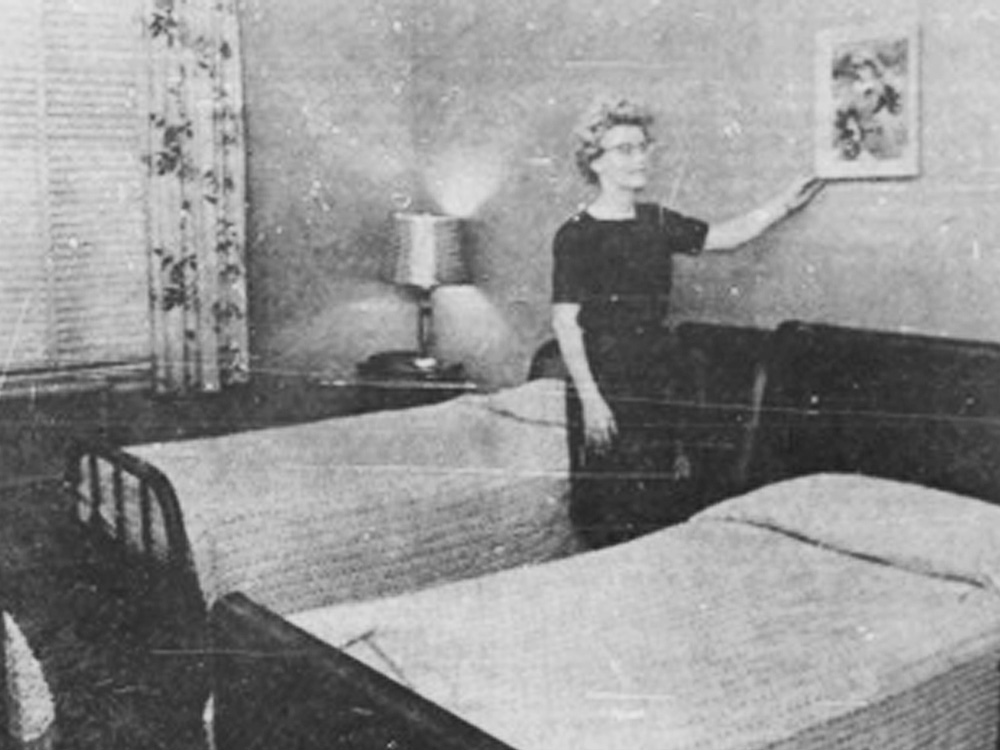
They secured a grant from the Federal government that focused on youth employment, giving them the opportunity to kickstart their journey to remove the issue of domestic violence against women out of the shadows of world issues.
On April 1st, 1973 the doors of the Interval home were open– initiating the beginning of protection of women and children suffering through domestic abuse.
The opening of this shelter gave Jan the ability to leave her abusive home, and eliminated her concerns of finances and having a warm place to stay with her children.
Today, shelters that offer refuge to women in the GTA, are becoming overwhelmed by the demand, and have had the unfortunate task of turning women and children away.
How has Canada come so far for the issue of domestic violence against women, but still struggling to gain the extra funding necessary.
“The wait is too long. We’re seeing women wait two, three years and not get a call for social housing”.
There is a high demand for long-term housing in contrast to short term housing. Which is where we stumble on an issue, women are looking for a place to stay with their children long term– therefore the lack of funding is what the issue is. See this link to find more information– https://globalnews.ca/news/5228696/canadian-shelters-women-funding/
The House of Commons committee on the statue of women issued a report of 20 recommendations to provide more accessible women shelters. Some of the recommendations are as follows: more funding for repairs, renovations and expansions and more funding for on-reserve shelters: to expand culturally sensitive services.
These recommendations will help improve the stability of women shelters, and give opportunities for an expansion of resources. The issue of women shelters is one that has had excruciating long term effects on not only Canada, but worldwide. Individuals have been extremely tentative to the issue, which comes out to being a positive, ‘slow and steady wins the race’. The inadequate funding of women’s shelter is an uphill battle, but it is one that is being worked towards by many.
Sources
Shelters in Canada are turning away women due to lack of resources, funding: studies
https://www.thespec.com/community-story/7388647-the-story-of-canada-s-first-women-s-shelter/
https://thetyee.ca/Culture/2019/10/31/Unsung-Heroes-Womens-Shelters/
 Brooklyn's blog
One thought on “Long Blog Post #2- The Issue With no Name”